A Five-Beat Plan for a Silent Comic Scene
A five-beat plan for a silent comic scene turns a visible task into playable action, with staging choices that make each physical change easy to read.
A five-beat plan for a silent comic scene works when the audience can track the performer, the object, and the space at a glance. Stage the action so each shift in the object’s position or the performer’s balance reads clearly, then let the five beats shape the scene.
Stage the visual problem
Choose a task with a visible endpoint: place a vase on a narrow shelf, fold a map, or get a glove onto a resisting hand. Keep the important object in a clear sightline. The audience needs to see its starting position, the performer’s contact with it, and the result of each attempt.
Set the playing area before you choreograph. Onstage, mark the shelf or doorway with tape during rehearsal and check the action from the back row. For video, keep the object and the performer’s hands inside the frame. In either space, use a still opening pose long enough for viewers to register what matters.
- Object visible: If the audience can see the prop throughout the action, build the scene around its movement; if the performer blocks it, adjust the angle or reposition the prop.
- Goal readable: If a viewer can identify what the performer is trying to do from the opening action, proceed; if not, add a direct reach, placement, or protective gesture.
- Space clear: If the performer has room to show a change in balance or direction, use that pathway; if not, simplify the movement or shift the playing area.
- Scale suitable: If a small hand action is visible from the audience’s seats, keep it precise; if it disappears at a distance, enlarge the gesture or make the object’s position do more work.
- Ending frameable: If the final pose can be seen without an extra explanation, keep it; if the image is hard to parse, remove a prop or reposition the performer.
- Safe movement: If a planned move requires a real fall, sharp object, or unstable furniture, replace it with a controlled illusion; if you cannot stage it safely, remove the move and consult a qualified movement professional.
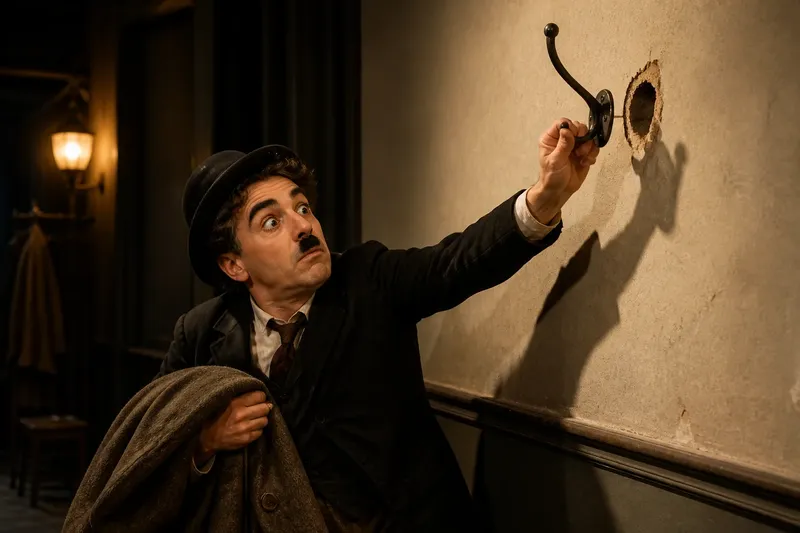
Say you are staging a silent scene about hanging a coat on a hook. The coat begins folded over one arm, and the hook is fixed to a wall at a height the audience can see. The performer reaches up, the hook slips loose, and the performer catches it before the coat falls. That opening establishes the task and gives the audience a clear view of the prop’s movement.
Shape five physical beats
Write one observable action for each beat. Give every action a distinct physical picture, not just a different facial expression.
- Want: Show the target and the intended placement. The performer lines up the coat with the hook.
- Obstacle: Let a visible physical event interrupt the task. The hook tilts when the coat touches it.
- Escalation: Change the performer’s bodily tactic. They pin the hook with one hand and lift the coat with the other, creating an awkward lean.
- Reversal: Shift the balance of the scene through the object’s movement. The hook comes free, and the performer must hold it while the coat hangs from their arm.
- Visual finish: End on a composed image that makes the new arrangement unmistakable. The performer wears the coat while holding the hook at the wall, still poised to hang it.
Read the action as a sequence of visible changes: the coat moves toward the hook, the hook tilts, the performer changes stance, and the hook comes away. If a beat does not alter the performer’s posture, the object’s position, or the audience’s view of the task, give it a clearer physical result or cut it.
Make the staging legible
Use body angle to keep hands and props visible. A performer facing the wall may hide the coat and hook; turning slightly toward the audience can preserve the illusion while exposing the important movement. Keep the face available for reactions, but let the object action carry the information.
Control the rhythm with pauses at visual transitions. Hold after the hook tilts so the audience can register the change, then move into the awkward attempt. Avoid filling every pause with a twitch or extra gesture. Stillness can make a small shift easier to see.
For video, establish the full action before choosing close shots. If the scene depends on the relationship between the wall, hook, and performer, a tight view of the face will hide the cause. For a stage, rehearse with someone watching from the farthest seat and ask them to describe the object’s path, not to judge whether the scene is funny.
What should each beat show?
How can the audience read a silent goal?
Point the performer’s attention and movement toward one visible target. A direct reach followed by a careful attempt to place the coat shows the task without a spoken explanation.
How should a prop change position?
Make the movement start from a visible cause, such as the coat touching the hook. If the prop shifts before the performer interacts with it, show what moved it or remove the unexplained change.
When should a performer pause?
Pause after a physical change that the audience needs to register, such as the hook coming loose. Resume once viewers can see the new arrangement and the performer’s response.
How can the final pose stay clear?
Arrange the body and prop so the audience can identify both the original task and its altered result. If the coat, hook, and hands overlap, separate their positions before holding the image.
Revise from the back row
Imagine a rehearsal in a small theater with a coat, a loose practice hook, and a taped wall mark. You watch from the back row and notice that the performer’s shoulder hides the hook when it slips. Move the performer’s mark a little to the side, then repeat the reach with the coat held outward. Now the hook’s tilt remains visible, so the audience can follow the obstacle; the tradeoff is a less natural angle toward the wall, which the performer can soften with a small turn of the head.
Use these checks after each run:
- Opening picture: If the goal is visible before the first interruption, keep the opening; if not, add a direct look or reach toward the target.
- Cause of movement: If viewers can see what makes the prop shift, preserve that contact; if the motion seems uncaused, reveal the contact or change the prop action.
- Body silhouette: If hands and object remain separate against the background, keep the angle; if they merge, turn the body or adjust the prop’s height.
- Beat distinction: If each attempt creates a different body shape, retain the sequence; if two beats look alike, change the tactic or remove one.
- Reversal image: If the new arrangement changes what the performer can do, keep it; if it only adds decoration, make the object force a different action.
- Final hold: If the coat, hook, and performer’s intention read together, hold the pose; if one element is hidden, reset the spacing before the ending.
When revising a five-beat plan for a silent comic scene, change the placement or movement that obscures the action before adding another gag. A clear hand path, a visible prop shift, and a well-composed final image give the audience the information it needs without breaking the silence.