The Rule Behind a Running Gag
The rule behind a running gag turns repetition into expectation, then makes one precise change earn a laugh without exhausting the pattern.
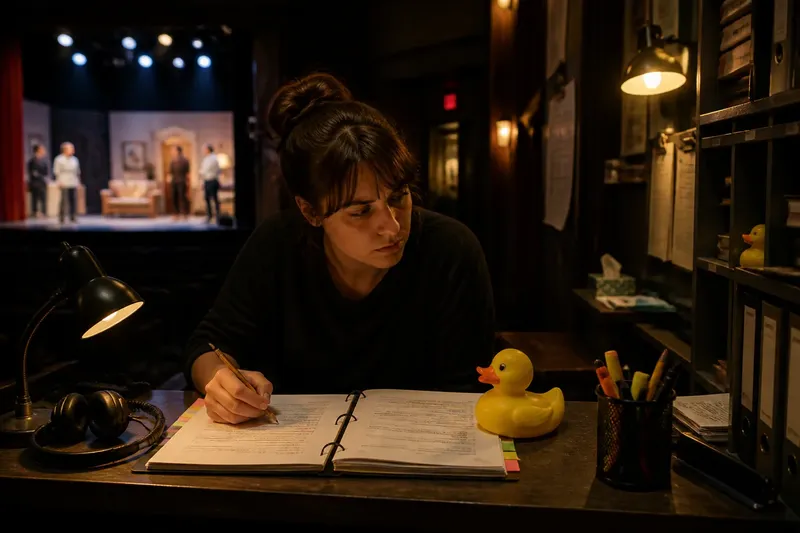
A running gag works when the audience can predict its shape but not its next variation. The rule behind a running gag is the small, repeatable pattern that teaches viewers what to expect, so one carefully chosen change can break that expectation and earn a laugh. To see how the mechanism develops, follow an invented situation: a community theater’s volunteer stage manager keeps finding a rubber duck on the prompt desk.
Choose a clear rule
Imagine the stage manager, Mira, is preparing a comedy showcase in a small theater. Each time she returns to the prompt desk, a yellow rubber duck sits beside the script. She moves it to a shelf. Later, it is back on the desk. The pattern is simple: whenever Mira leaves the desk, the duck reappears there.
That repeated action is not yet a running gag. It is raw material. For a comic pattern to take hold, the audience needs to recognize both the setup and the outcome. The duck’s return is the outcome; Mira’s brief absence is the setup. Once viewers understand the connection, they start anticipating the return before it happens.
Keep the rule narrow enough to state in one sentence. “The duck returns to the prompt desk after Mira leaves” gives performers a clear comic engine. “The theater keeps behaving strangely” is too broad. A broad premise can produce many jokes, but it does not give the audience a specific expectation to track.
A useful rule also leaves room for action. Mira can respond in different ways without changing what the audience has learned about the duck. At first, she may move it casually. Later, she may inspect the desk or ask the cast who put it there. Those responses can add character, but the repeated pattern remains the audience’s anchor.
Teach through repetition
The first recurrence should establish the rule without explaining it. Mira leaves to fetch a pencil. When she comes back, the duck is beside her open script. She glances at it, moves it to the shelf, and continues marking the page. The placement and return are easy to follow; the restrained reaction keeps the scene moving.
On her next trip away from the desk, the duck is back. This time Mira looks at the shelf, then at the duck, and shifts it a little farther away. The repeated outcome confirms that the first return was not a one-off detail. A small response signals that Mira has noticed the pattern, too.
Repetition has to do more than copy the same beat. Each recurrence should strengthen recognition or develop Mira’s response. If the duck simply appears, disappears, and appears again with no change in attention, the audience may learn the rule but stop caring about it. If Mira spends a long time investigating before viewers understand the pattern, the scene asks them to solve a puzzle instead of enjoying anticipation.
In rehearsal, track what the audience can know at each appearance. Before the rule is established, a return may read as coincidence. After the pattern is clear, the same return can draw a laugh because viewers anticipated it. Give each recurrence enough space to register, but avoid explaining the joke after the audience has already understood it.
Keep the variation precise
Once the audience can predict the duck’s return, change one important part of the rule. Do not add a stack of surprises at once. If the duck returns in a new place, starts making noise, wears a costume, and prompts Mira to shout, viewers have to process several changes before they can enjoy any one of them.
Say Mira leaves the desk to collect a clipboard. When she comes back, the duck is on the shelf where she put it—not on the desk. The placement is the one changed part. The duck has returned, but it has done so by preserving Mira’s previous move rather than undoing it. The familiar pattern remains visible, while its outcome shifts just enough to catch the audience off guard.
This variation works because it grows from the rule instead of replacing it. If the duck suddenly appears in the theater lobby with no connection to the desk, the audience may not connect that event to the established gag. A useful deviation feels surprising at first and logical on reflection: viewers can see what changed and still recognize what stayed the same.
Think of the rule as a promise with a boundary. The audience expects the duck to return to the desk. A variation can bend the return, alter who notices it, or change what Mira does next. The more precisely the writer identifies the expected part, the easier it is to choose a variation that breaks only that expectation.
Let the character matter
The gag becomes richer when Mira’s reactions reveal something beyond irritation. She is careful about keeping the prompt desk orderly, so the duck’s repeated appearance tests a habit the audience can see. Her choices can escalate in attention without turning every return into a louder reaction.
Imagine that, after the duck appears on the shelf, Mira places it inside a closed script binder before leaving to answer a question backstage. When she returns, the binder is shut, but the duck is sitting on top of it. This invented continuation changes the duck’s location and Mira’s tactic while preserving the core expectation: the object is back at her station after she leaves.
That action also gives the audience a new question to anticipate. Will Mira keep trying to contain the duck, or will she adapt? The character’s response can carry the scene forward, but it should not obscure the original comic rule. The pattern and the person reacting to it work together; one provides recognition, the other gives the recurrence a fresh consequence.
Make the response readable in the performance. A quick check of the shelf, a careful adjustment of the script, or a change in how Mira handles the duck can show that she is learning. The actor does not need to underline the joke with an exaggerated display. A distinct, purposeful choice often gives the audience more to read than a general expression of disbelief.
When does a running gag pay off?
How many times should a pattern repeat?
Repeat it until the audience can anticipate the rule, not until you reach a fixed count. If viewers do not recognize the setup and outcome, a later variation may feel arbitrary. If they already predict every detail, change a meaningful part or end the gag.
What makes a variation feel fair?
Keep enough of the established pattern visible that the audience can connect the new event to it. Change one feature, such as the duck’s placement, while retaining the return to Mira’s station. A variation that abandons every familiar detail may feel like a new joke rather than a payoff.
Can a character change without breaking the gag?
Yes. Let the character react differently while the audience still recognizes the recurring pattern. Mira might move from casual dismissal to cautious planning, while the duck’s return remains the scene’s comic engine.
When should the gag stop?
Stop when the pattern has delivered its strongest variation or when another repeat would offer no new recognition, response, or consequence. A clean ending preserves the audience’s pleasure in having understood the rule instead of asking them to watch it wear thin.
End on a clear payoff
For Mira’s final beat, the audience should recognize the original rule and the change that has transformed it. Imagine she leaves the prompt desk to join the cast onstage. When she returns after the showcase begins, the duck is sitting in her empty chair, facing the desk. The object has moved from desk decoration to a quiet stand-in for Mira, while the established return still holds.
The final placement should not need an explanation. Viewers have followed the duck from desk to shelf to binder and learned to expect it wherever Mira tries to leave it. Now its position implies that it has taken over her place. The joke pays off through a change in meaning, not merely a bigger reaction or a more elaborate prop trick.
When writing a running gag, name its rule, identify the audience’s expected outcome, and choose one feature to alter for the payoff. In the invented theater scene, the duck’s repeated return teaches the pattern; its eventual occupation of Mira’s chair changes what the return means. That is the practical value of the rule behind a running gag: it gives the audience enough certainty to enjoy the moment when the pattern bends.