The Pause That Changes a Punchline
The pause before or after a punchline changes what an audience notices. Choose the placement that sharpens surprise, character, or the laugh itself.
A pause before a punchline builds expectation; a pause after it gives the line room to land. That timing choice can turn the same words into a surprise, a character reveal, or an invitation to laugh. The useful question is not simply how long to stay silent, but what the silence should make the audience notice.
Try three options: pause before the line, pause after it, or keep the words moving. Each directs attention differently. Choose based on the scene’s intended effect, then rehearse the transition so the silence feels like part of the performance.
Before the punchline
A pause before a comic line builds expectation. The audience sees the speaker stop, look, or gather themselves and starts predicting what might come next. The line then arrives against that prediction. This placement can sharpen a reversal, an unexpected detail, or a sudden change in the speaker’s confidence.
The pause can also make a character seem deliberate. A person who carefully chooses a foolish answer may be funnier than one who blurts it out, because the silence suggests that the answer has passed through their mind and been approved. The performer’s face and posture become part of the setup.
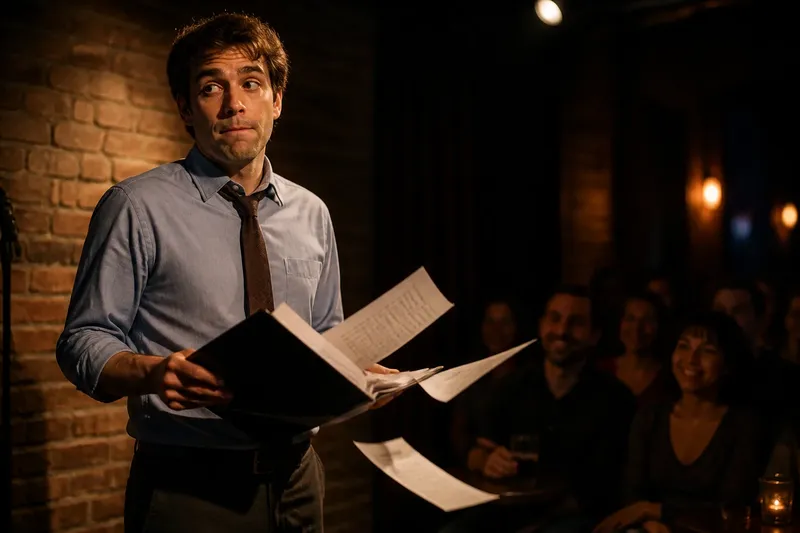
Connect the pause to a visible thought. A glance at a note, a swallowed response, or a brief effort to stay composed gives the audience something to read. If the performer freezes without an apparent reason, the audience may assume a missed cue or forgotten line rather than comic intention.
This placement suits dialogue where anticipation is part of the joke. It may work less well if the wording is easy to predict or the scene has a quick, breathless rhythm. In those cases, an added wait can announce the punchline too loudly.
After the punchline
A pause after the line gives the audience room to register it. The words arrive, the performer holds still or maintains a look, and the audience can respond before the scene moves on. This works well for a surprising image, a blunt admission, or a reaction that would be lost beneath the next sentence.
The post-line pause can change who seems to own the joke. A speaker who delivers a remark and calmly waits may appear smug, patient, or unaware of the damage. A listener who takes a beat before reacting can make the punchline feel more awkward or pointed. The silence becomes part of the relationship between the characters.
Choose this placement when the audience needs time to understand the line or enjoy its implication. Avoid holding for a laugh that has not begun: a fixed, expectant stare can pressure the room and make the performance feel self-conscious. Instead, let the character’s behavior continue through the silence. A small adjustment, steady gaze, or return to the task can keep the moment alive.
This approach suits performers who can stay present without adding extra business. If the next line depends on speed, the pause may break the exchange. Preserve the rhythm in that case and let the following response carry the reaction.
Without a marked pause
Sometimes the strongest timing is a clean run into and out of the punchline. Continuous speech can make a line sound impulsive, casual, or hidden in plain sight. The audience may catch the joke just after it is spoken, creating a different pleasure from a clearly signposted setup.
Moving through the line also protects momentum. In a fast exchange, a pause can make each character seem to wait their turn for a laugh. A quick delivery keeps the scene sounding like a conversation and can make the punchline feel more natural. This is often useful when the comic effect comes from accumulation or a character’s inability to stop talking.
Little or no pause does not mean rushing or flattening every word. Keep the thought clear, and let the punchline’s important word receive vocal emphasis if needed. The emphasis comes from phrasing, pitch, or stress rather than a stretch of silence.
Imagine a performer playing a nervous office worker who says, “I’ve prepared a short presentation,” then opens a folder that spills loose pages. A pause before “short” could make the worker seem to be choosing a boast; a pause after the line could let the audience take in the mismatch; a continuous delivery could make the boast sound oblivious as the papers fall. The performer can choose whether the joke belongs mainly to anticipation, the audience’s reaction, or the character’s unbroken confidence.
What placement changes?
Timing shifts the audience’s attention, but the same silence can read differently depending on the actor’s behavior. A pause before a line, paired with a warm smile, may suggest that the character is about to share something playful. The same wait with a rigid posture may suggest dread or calculation. Before settling on a pause, decide what the character thinks is happening.
In rehearsal, perform the line with a pause before it, with a pause after it, and without a marked pause. Keep the surrounding dialogue and movement steady. Notice whether the intended thought comes through, whether the audience responds at a different moment, or whether the character reads in an unexpected way. Keep the version that serves the scene, not simply the one that produces the biggest isolated response.
When working alone, record each version on a phone. Listen for whether the silence sounds purposeful, then watch the video to see what your face and body communicate. A pause that sounds long may look active if the character is making a clear decision; a shorter silence may feel stalled if nothing changes.
How should you choose?
When should I pause before a punchline?
Use a pre-line pause when anticipation or a deliberate thought is part of the joke. Give the audience a readable cue, such as a glance or a change in posture, so the silence feels connected to the character.
When should I pause after a punchline?
Pause after the line when the audience needs time to absorb an image, implication, or reaction. Keep the character present during the wait instead of looking as though you are asking the audience for approval.
Can a punchline work without a pause?
Yes. Continuous delivery can make the joke feel impulsive or preserve the energy of an exchange. Use clear phrasing and vocal emphasis where needed so speed does not bury the important word.
How do I know if a pause is too long?
A pause is too long when the silence stops developing the character’s thought and begins to look like a search for a response. Review the moment with the dialogue and movement around it; the pause should change what the audience understands, expects, or notices.
Choose the scene’s need
Pause before a punchline when the audience should anticipate a choice or reversal. Pause after it when the line needs room to register. Keep the delivery moving when speed or apparent spontaneity matters more than a held reaction.
For a final decision, ask what you want the audience to notice first: the speaker’s thought, the words themselves, or the room’s response. That answer gives the silence a job. Once you know its job, shape the pause with your eyes, breath, and posture instead of relying on duration alone.